Wednesday, June 3, 2015

My First Container Garden

I have grown plenty of flowers and other plants in pots and other sorts of containers. But I have not tried to grow vegetables in containers before. So this is a learning experience for me as well.  I had a couple old kitchen trash cans in my garage. Sometime in their life the lids either broke or just didn't latch closed anymore. I have quite a few of them since I don't throw out useable things.

I know that a full bin would be quite heavy so I filled them 3/4s full with wood chips and the top 1/4 with a mix of compost, light soil, and store bought potting soil. The bins are only about 15-20 lbs now but as the wood chips absorb water they will get heavier. I put a layer of newspaper between the soil and the wood chips so the soil wouldn't wash down into the bed of chips. I am hoping that the wood chips will hold water, which should wick up into the soil when needed.

I always pinch off the lower branches of the tomato plants and then bury the plant deep in the soil. Tomatoes will put roots out anywhere that it is in contact with soil. The soil is very rich and very well drained. I planted eight inch tall plants three weeks ago and look how big they are already.


I have back against the wall because we were still getting frosts at night when I planted them. This will also protect them for a few weeks in the fall if they survive that long.  They also get some reflected light from the light tan siding. They are on the south side of my house so they are in the shade by 4:00 PM; they need all the sunlight they can get until then.


Both plants already have flower buds on them. I intend to pinch off some so more energy can go to fewer fruits. This will increase the speed at which they mature. I don't need baskets of tomatoes at the end of summer; I want a couple a week for as long as possible.


Under one tomato I planted onion sets. There aren't many but they will also grow fast and the onions will keep some insect and mammal pests away. They will also decrease the impact of water on the soil, keeping it from splashing. Tomatoes are subject to blossom end rot when soil splashed up on the plant.


Under the other tomato I planted radishes for the same reasons. The radishes will mature in 30 days and as I pick them I will plant something else.


I'm using an old recycle bin that was put out for trash as a bin for green beans. I used the same soil over wood chips technique as with the tomatoes. The package says to plant the beans three inches apart in rows that are eighteen inches apart. The 18 inch rows are really for the use of tillers, not because the plant needs that much space. I never plant in long rows, I plant in blocks. I stagger the seeds so that they are the same distance from each other in all directions. Since the planting distance on the package said three inches in rows, I plant them six inches apart in all directions. I explained this technique before and show it below.  These beans should sprout in about ten days. I have a very active squirrel and bird population here so I will have to cover the beans with something when they come up.


I missed the pepper plant in the middle, between the tomatoes. That is planted in a standard 12 inch pot but otherwise the same as the tomatoes. It is also doing very well, tripling in size and it is dark green, which is a healthy sign.

Monday, June 1, 2015

31 May 2015 Garden Progress

After yet another dry week I gave the garden a good watering on Saturday and the Sunday, after I left, a torrential rain came through our area. I have no idea if there is any damage to the garden and won't until next weekend. Fingers crossed.

As you can see the spinach has done very well. This is two of the six plants I have growing.  I already picked a bag of spinach leaves from the left plant.  The trick is to take mature leaves from the outermost parts of the plant and new leaves will grow in from the center.  Eventually the plant will "bolt", what they call it when it goes to seed. This usually happens when it gets warmer or when you have removed enough from the plant that it somehow knows to stop growing and start producing seeds. In any case, you will get quite a few salads from each plant.

The tomatoes have more than doubled in size in just a week. I pruned off the lower most branches. I usually try to have a ten inch gap between the lowest branches and the ground. This helps prevent diseases such as blossom end rot from starting. Any water-splash from the ground up to the plant is not good.  There are a few flower buds so tomatoes will start forming in a week or so.  The peas are off to a slow start. I'm not sure what is causing them to grow so slow, perhaps the dryness.


I harvested all the carrots, turned the soil, and planted the area in carrots and parsnips. Normally I wouldn't plant the same crop in the same area but since the original carrot crop was in during the winter and I harvested them a little early, I don't have much fear of any residual disease in the soil. But I will definitely plant something else after this crop matures. If I plant something fast growing I will get three crops from the same space in one year. That is not too bad.

As you can see, I laid out rows 4-5 inches apart. Every other row is carrots and the other is parsnips. What I very often do is scratch in my rows to the depth recommended for the particular seed. In this case it was half an inch. I drop the seed in the row and then cover it with either sand or compost. In this case I used compost. The contrast makes it easier for me to pull tiny weeds without pulling up a tiny seedling. Also, the sand or compost is looser and helps the seed to sprout and for the seedling to emerge. The compost will help feed the seedling with a slow release fertilizer.  I am hoping the down pour did not wash out these seeds. The rain was so heavy that there was localized flooding after only 45 minutes.

I didn't take a picture but the green beans that I planted a week ago are already up. Two of them didn't form properly so I'll replant them next weekend.

All the onions have also sprouted nicely and are starting to grow.

My next posting will be of my container garden that I started three weeks ago at my second house where I work. It is my first try at a container garden so it is all new to me.

Sunday, May 17, 2015

16 May 2015 Garden Progress

I wasn't home last weekend and it didn't rain at all in those two weeks so I was a little worried about the state of things. But most everything was mulched and the sun isn't too severe yet so everything was fine; but the soil was very dry.  Grass cutting had to come first though so I didn't get in the garden until Sunday. It takes six hours to cut my yard.


The two tomatoes more than doubled in size and are dark green so I know they are doing fine.  There is no threat of freezing this week so I removed the plastic covers. I'll leave the water-filled bottles for insurance.  In the back are the peas. They aren't growing as fast as I expected they would but it was pretty dry. I gave all the plants a heavy watering so we'll see what they look like next week.


I was taking some stuff down to my compost bin and saw a pile of what I'm guessing are cantaloupe seedlings. They were growing from discarded seeds from sometime ago when my wife ate some cantaloupe. So I thought, "Why not try to transplant them?".  I'm not confident that they will take or survive the many yard rabbits I have. But it costs nothing to try so I planted six groups of seeds; this is the largest. I don't eat cantaloupe myself but my wife does so if I can grow some this year I'll be a hero. I have grown them before in this garden but it has been many years. They take up a lot of room if they sprawl across the ground. I don't normally have the room to spare but this year's garden will be smaller than normal. I usually trellis cucumbers and melons when I do grow them. Keeping them off the ground makes for better fruit with fewer disease and insect (slugs and snails) problems.


The peppers look great; in fact they are ready to blossom. I am going to pinch off the blossoms though because I want the plants to get bigger before they start to set fruit (yes, peppers are fruit). At my local grocery store Saturday, I bought peppers at $1.25 a piece. That is just crazy.  I normally get 4-5 bell peppers from each plant so at that price they are worth $5-$6.25 each.  I paid $2.50 for four plants so I should come out ahead. 


My youngest son and I went hunting quite a bit this past fall and winter and we only got two rabbits.  There just aren't as many around here as there were when I was his age. I used to get my limit several times a season. But my yard has way more than its fair share of rabbits. If you look closely at the spinach plants you will see the amount of damage a rabbit problem can cause.  So I put cages around these four plants. Spinach grows really fast so I will be able to harvest the outer leaves next weekend. The carrots are also just about ready to be dug out. There should be about 20-25 carrots in there and I've eaten a dozen that I pulled out to thin the rows.


I pulled the glass off the cold frame and watered everything. There is a spinach plant and two rows of radishes growing in there. I want to plant some more stuff but I was short on time. The radishes will be ready to pick next weekend. The reflective sides and mirrored back makes the best use of limited sunlight in the winter and early growing season.


The strawberries had a rough winter. Between the severe weather, rabbits, and deer, I lost something like half my plants. It is very fertile soil so the ones that do grow should be large and flavorful. I will probably replant this bed next year. I usually pull all the spent plants in the fourth year and grow anything other than strawberries for at least two years to reduce any chances of building up diseases in the soil. This will be a nice raised bed for vegetables during that period.


If you looked at my blog when I showed my raspberry patch after thinning, you might find it hard to believe this is the same place. But it is. One advantage of thinning, and I do it every year without fail, is that it opens up the plot to more sunlight. Most raspberries grow on two year-old canes. In other words, the berries grow on last year's canes. Mine grow on new branches that grow off of last year's canes.  If all goes well, this year's crop will be double what I got last year. I'm looking forward to it. We rarely have any left after fresh eating to get any into the freezer.


Today I planted green beans and onion sets. I'm not planting many, just enough to keep us in fresh beans. I still have beans in the freezer from last year and the year before. We will continue to cook them and make space in the freezer.

Tuesday, May 5, 2015

The Start of my 2015 Garden

I will try to better document my garden this year. Last year I had some injuries that prevented me from working in my garden as much as I needed to. In my April 14th blog posting I mentioned that I had carrots and spinach already growing, from seeds I planted in the Fall.  Here is what they look like now:


I moved two of the spinach plants to give them more room to grow and I put down a thin dried grass mulch to keep down the weeds and preserve moisture. I also opened up both sides of the enclosure so the sun would not over heat the plants. They are still protected from light frost but if a very cold night came they could be damaged. I'll watch the weather reports to make sure it doesn't get too cold. I have already eaten over a dozen carrots to thin them out a little bit and I should be able to start picking spinach next week.

The other thing I have growing since the fall are hardwood cuttings. I took cuttings from apple, peach, cherry, blueberry, and poplar branches.  I did this later than what would be ideal. I don't think any of the peach or cherry cuttings are rooting but it looks like a few of the other cuttings are taking root. I won't really know until the end of summer. You should be able to see some cuttings are leafing out. I have the planting box shaded since cuttings can't stand too much direct sun.


I enjoy tomatoes from my garden but can't eat a store-bought tomato; they taste horrible. Normally, I plant my tomatoes in early June, as recommended for my area. Then I get my first tomatoes in late August and into September until the first frost. This year I am planting them six weeks earlier and praying for warm nights so they don't get cold burned.  It is a bit of a gamble to be sure. But I am trying to protect them with water bottles to hold some heat and also a plastic cover to hopefully keep any light frosts from burning them.  Only time will tell if this succeeds. 


I did more or less the same thing with three pepper plants. Last year rabbits ate half my peppers so this year I am starting them under a cage. I have a double pane glass window panel over them. The glass helps warm up the soil and should keep frost away as well. I also mulched them with dried grass since the sunlight will be concentrated.


The past couple years I have planted peas but they never survive the rabbits and deer. So this year I also put them inside a cage (literally a small dog cage that I found put out for trash). I only planted a few since no one except me will eat them. I love fresh, crisp garden peas.  They are already up out of the soil and look good.


The thinned out raspberry patch also looks very good. The harsh winter damaged a lot of canes and the hungry rabbits and deer ate anything sticking out of the snow. So it is a very thin patch this year. That should not be a big problem though. I expect that the extra light that will get through will cause the canes to bear more berries. Last year wasn't a great one for my raspberries but this year should be.

Lastly, I have a visitor in my woodshed. A mourning dove set up her household atop the wood pile. I wanted to do some revisions to the shed this spring but now I will have to put that off until the chicks fledge and find a new place to live.


Once again I will only be home on weekends so I hope I can find the time to maintain my garden. I still have potatoes, onions, green beans, and blueberries from last year though so I guess I am doing okay.

Get out there, grow a garden, and save money on food. You can go back through my blog for lots of gardening tips from the past couple of years.

Tuesday, April 14, 2015

Guns


Due to the insanity of a few people we are now, as a nation, in a big discussion about guns. The looming threat of new gun and ammunition restrictions has increased gun sales and made ammunition hard to find; especially .22 rimfire. I won't preach my own feelings on the Right of Americans to own and use guns legally, you are an adult with your own thoughts on that. But guns can play an important part in your future survival.

For our purposes here, we can lump the importance of guns into two categories:

1. Protection - of yourself, your family, and your food stores.

2. Acquisition of food.

So what would be good choices? What guns should you have on hand?

There are some general rules that cross the lines of both categories.

a. Affordable: You must be able to afford the gun and adequate stocks of ammunition. You have to weigh the cost benefit of the gun. How much shelf-stable food could you buy and store for the price of the gun? How expensive is the ammunition? You must fire approximately 50 rounds a month to gain and maintain a high level of accuracy and proficiency. When food and supplies are scarce, you need to be able to do "one shot, one kill". When you need to be keeping a low profile it is far to late to train.

b. Obtainable: You must be able to obtain adequate stocks of ammunition. Some cartridges are very common (.45 ACP, 9mm, 30-06, 30-30, 5.56mm, 12 gauge, .22 rimfire Long Rifle). Some are more rare and difficult to get (16 gauge, .22 rimfire magnum, .270 Roberts, etc.).

c. Simple: The more moving parts the more likely the gun is to jam or break. Single shot break actions are the simplest, bolt actions are usually good, pump action and semi-automatics are prone to problems though the better quality ones are quite good.

d. Accurate: You want a gun that shoots no worse than one and a half minute of angle (MOA). If you don't know what that means then you have a lot to learn before you buy your first gun.

e. Storable: You probably won't be able to carry your gun at all times. When it is not in your hands you need to store it in a safe, protected, secure place. This might be underground or hidden in other damp places. Regular blued guns have to be oiled constantly or they will rust. The best choices will be guns with modern, more durable finishes, nickle, or stainless steel.

For protection, any gun you are comfortable with and has enough power to stop a man is good enough. But I will only talk about guns for getting food here.caliber

1. The .22 rimfire is hard to beat as an all-around food-getting round. In a decent rifle you can expect to hit and kill anything from squirrels, rabbits, birds, raccoons, to small deer. A lot depends on the actual brand and type of .22 round. The best hunting round is the CCI Stinger .22 but those aren't manufactured any longer. If you can find some, buy them. The Remington Yellow Jacket round is a good one. Generally the lighter the bullet, listed in grains, the faster the velocity. With small game, and taking head shots, the faster the bullet the more likely the clean kill. For heavier game, like groundhogs, you want to be close and use a heavier bullet. 40 grains is the heaviest .22 round available. I never found hollow points to be worthwhile in this caliber. The round just isn't fast enough to reliably expand. Hollow points are not as accurate as round nosed bullets either. 

2. For large game, such as deer, sheep, pigs, elk, bear, etc., you need a centerfire cartridge. There is a nearly endless variety of rounds so keep what you have or trade out for one of the most common rounds. Ammunition can be in short supply and stores are more likely to carry the standards: 30-06, 30-30, .308,.223, 7mm, .243, .270; are some of them. Anything over 100 grain bullet weight will kill most North American game animals.

3. Shotguns are great all-around guns because they have such a variety of shells. Some are filled with "shot" (small pellets) and some have solid slugs. Shot can be very fine, suitable for smaller birds such as pigeons, doves, and woodcock. Shot can be medium sized suitable for small mammals and large birds such as rabbits, squirrels, and turkeys. Shot can be large (buckshot), which is suitable for hunting medium and large game from close distances; usually less than 40 meters. Then there are slug rounds. Slugs are solid rounds that look like very big bullets. Your shotgun needs to have a slug barrel or an open choke to use slugs. You can kill large game, anything in North America, out to 100 yards with a slug. Shotguns come in .410 caliber, 28, 20, 16, 12, and 10 gauge. The .410 is a handy, light shotgun but you need to be better than average due to the very light shot load. The 20 and 12 gauges are the most common. It is often very hard to find 28 and 16 gauge ammunition. 10 gauge is mostly used for water fowl hunting so the rounds are more common in areas where goose and duck hunting is popular.

4. Then there are combination guns, guns with more than one barrel. Savage used to make a great combination gun called the Model 24. There were several variants with different combinations of rifled barrels and shotgun barrels. I own a Savage Model 24 that has a .22 rifle barrel on top and a 20 gauge shotgun barrel below that. It is a heavy gun, to be sure. But carrying an assortment of ammunition for the two barrels I can literally hunt anything that walks or flies in the United States. The Model 24 is a highly sought after gun so they are hard to find and a bit expensive. Savage currently sells the Model 42, which is a .22 over a .410 shotgun. It is ultra-modern and also quite expensive. But it would be a good choice.

5. I don't recommend pistols for hunting though a good shot can do okay with one. I carry a pistol to kill wounded game. If times get really tough though you might want a pistol to defend and keep any game you shoot.

6. Take head shots if you are good enough. It saves valuable pelts, ruins less meat, and ensures quick kills. There is nothing worse than seeing an animal you shot scurry down a hole or run over the hill.


Over Wintering Hardy Vegetables

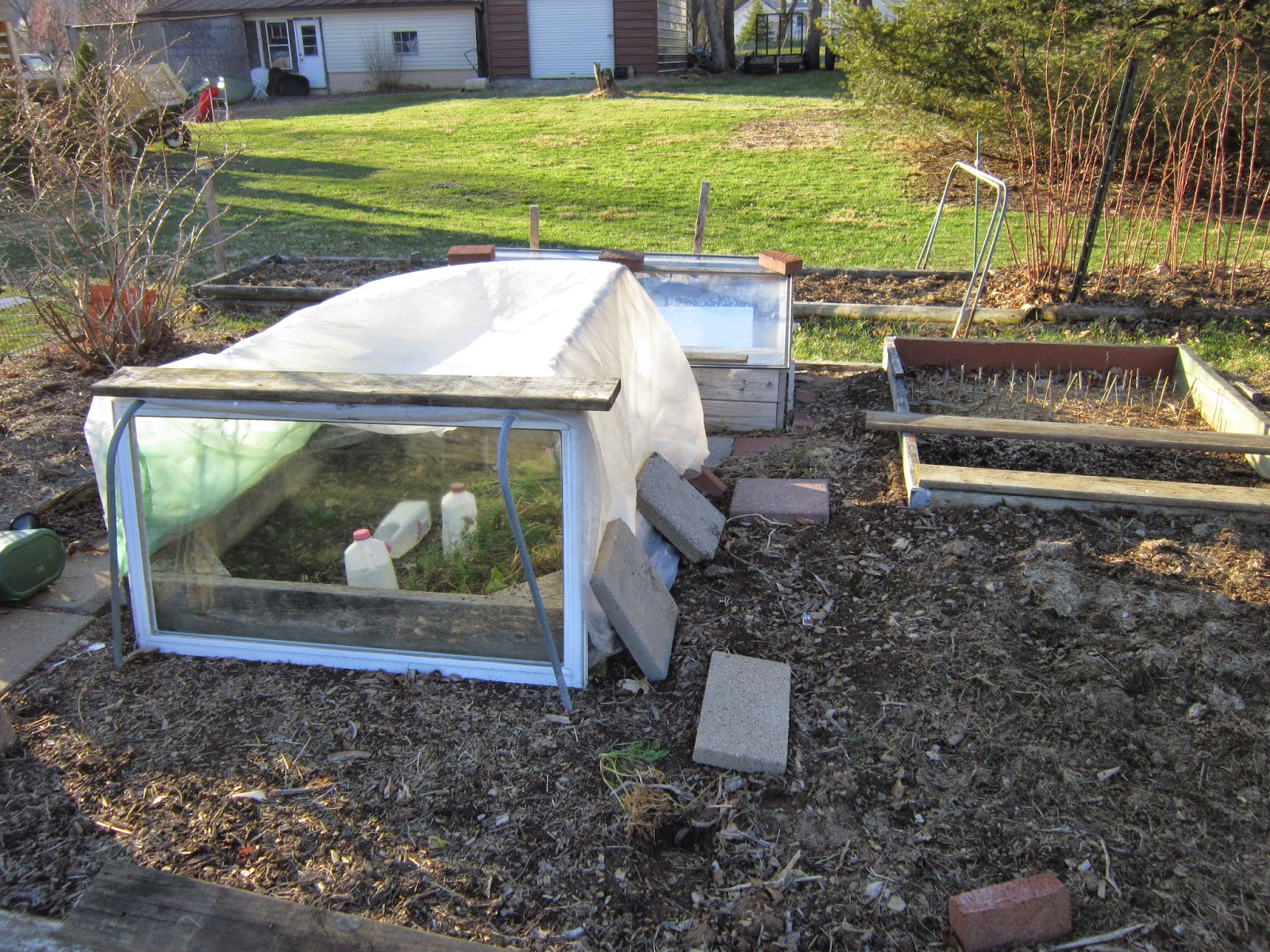
As I have done several times in the past I planted carrots, radishes, and spinach in the very late fall to attempt to grow it over the winter.  This winter was very cold and very harsh. I do not have an actual green house (yet) but I set up a makeshift one like I have done before.  

 The front is a double-pane window I picked up alongside the road at someone's house. They put it out for trash. The top and other sides is the plastic from a bed mattress I bought a couple years ago (a queen I think). So the plastic is doubled. The wood box, an old sand box that was my son's 24 years ago, is filled with a mix of sand, compost, screened soil, and chopped dried leaves. I wanted a very clean mix to grow carrots. I also placed six half gallon milk jugs full of water in the box to hopefully mediate the temperature inside the plastic. In the coldest months though the water jugs froze solid. This picture was taken on 11 April 2015.


The results were pretty good.  I planted about 30 carrot seeds and I think most of them germinated and grew. Some of the carrot leaves were burned by the cold and died but almost all the plants survived. I pulled out all the leaves and dead foliage and dug out a few of the carrots. The one carrot shown here is ten inches long.


There are also five spinach plants, out of six that I planted, growing. Now that the sun shines longer they will grow fast. What I have learned from doing this several times before is that mostly roots grow during the winter. That means that the plants are all set for extremely rapid growth once the days are warmer and the sun shines longer. I will start picking spinach leaves in about two weeks.


Below is a bunch of carrots that I picked to take to my other house. I've been eating them for lunch. They are very crisp and sweet with a strong carrot taste. Fresh, organic vegetables in the first week of April; that is hard to beat.


Friday, January 30, 2015

Rabbit Pie

One of my favorite dishes using rabbit or squirrel is to make a meat pie. It is very simple, very cheap, and very nutritious. Here is how to make it.


Using a crock pot (slow cooker), quarter one large rabbit or two squirrels, place the parts in the crock pot, and cover with water. Add a couple shakes of salt and either celery salt or chopped fresh celery. Cook for 2-3 hours until the meat is tender.

You will need about a quart of what we here in PA Dutch country call, "Filling".  You might call it "Dressing" or "Stuffing". I prefer to use homemade Potato Filling, a specialty in the PA Dutch area, but one of the box stuffings like StoveTop would work. The last rabbit pie I made I used a 75 cent box of no-name bread stuffing from one of those stores that sells recently out of date food items. It was fine.

You will also want some poultry gravy to pour over your serving.

I save leftover vegetables from meals in multiple plastic freezer containers and use them for soups, stews, and dishes like this. But you can use canned or frozen mixed vegetables. I like to use diced onions, carrots, peas, green beans, corn, and potatoes.

Pull all the meat off the bones and dice into small pieces. Throw all the diced meat and vegetables into a frying pan, season to taste, (I usually use a mix of Italian seasoning), and mix well while heating.

Preheat your oven to 400 degrees.

Using your own homemade or frozen pie crust, place one crust in the bottom of a deep bottom pie dish (I always use a glass pie dish). Dump in the now hot mixture of vegetables and meat. Press it down into the pie dish so that it is even across the dish. Add a layer of filling/dressing/stuffing to slightly above the top of the pie dish. Cover this with a second pie crust, any excess can hang below the edge.

Bake your game pie for about 30 minutes at 400 degrees. The crusts should be brown and crispy/flaky. Since the filling mixture was hot when you put them in the pie dish, you are really only cooking the crusts. The internal mixture blends its flavors while the crust bakes.

Scoop or cut out servings onto a plate or bowl, add gravy if you like, and salt/pepper to taste.

Serve with some good crusty bread and you have a great, inexpensive meal. This will serve six people and cost about $3.00 in total.